Posts

Showing posts with the label İngilizce gramer

Tercihler, Preferences

Image
Prefer Fiili İle Tercihlerde Bahsetmek 1. “Prefer” ne demek? prefer  = tercih etmek / daha çok sevmek Bir şeyi başka bir şeye göre daha çok sevdiğimizi söylemek için kullanırız. - I prefer tea.     → Çayı tercih ederim. - I prefer tea to coffee.     → Çayı kahveye tercih ederim. 2. Temel yapı A) İsimlerle (noun) Subject + prefer + noun + (to + noun) - I prefer tea to coffee.     → Çayı kahveye tercih ederim. - She prefers cats to dogs.     → Kedileri köpeklere tercih eder. - They prefer winter to summer.     → Kışı yaz mevsimine tercih ederler. > Not: “I prefer tea over coffee.” da denebilir. “ to ” daha yaygın, ikisi de doğru. B) Fiillerle (verb) İki yaygın yapı var: 1. prefer + V-ing Subject + prefer + verb- ing + ( to + verb-ing ) - I prefer reading to watching TV.     → Kitap okumayı televizyon izlemeye tercih ederim. - She prefers walking to taking the bus.     ...

Geçmiş Zaman

Image
1. Simple Past Tense Nedir? Simple Past Tense:    - Geçmişte olmuş ve bitmiş olayları anlatmak için kullanılır.   - Türkçedeki “-di’li geçmiş zaman”a karşılık gelir.     - geldim, gördü, oynadık, gittiler… Örnekler (İngilizce – Türkçe) - I watched TV yesterday.     → Dün televizyon izledim.   - She visited her grandmother last week.     → Geçen hafta büyükannesini ziyaret etti.   - They played football on Sunday.     → Pazar günü futbol oynadılar. She visited her grandmother yesterday. Ne Zaman Simple Past Kullanırız? 1. Geçmişte tamamlanmış eylemler    - I finished my homework last night.        → Dün gece ödevimi bitirdim. 2. Geçmişte belli bir zamanda olan olaylar    - He called me at 8 o’clock.        → Beni saat 8’de aradı. 3. Geçmişteki alışkanlıklar (artık devam etmeyebilir)    - When I was a child, I p...

Present

Image
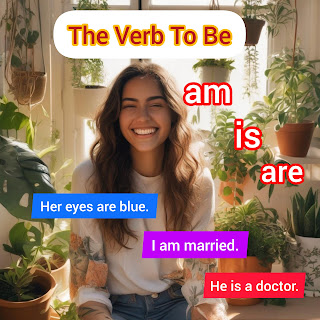
The Verb "To Be" The verb "to be" is one of the most important verbs in English. It has three present forms: - **Am**: used with the subject "I." - **Is**: used with singular subjects (he, she, it). - **Are**: used with plural subjects (we, you, they) and with the pronoun "you." Using "Am": - **I am** happy. - **I am** a teacher. Using "Is": - **He is** my brother. - **She is** a doctor. - **It is** a sunny day. Using "Are": - **We are** friends. - **You are** my best friend. - **They are** students. Summary: I am He/She/It is We/You/They are I'm  He's/ She's/It's  We're/ You're/They're  Exercises  **Instructions:** Fill in the blanks with the correct form of the verb "to be" (am, is, are). 1. I ___ excited about the trip. 2. She ___ a great singer. 3. They ___ my neighbors. 4. He ___ very tall. 5. We ___ going to the park. 6. It ___ cold outside. 7. You ___ my inspiration. 8. Th...

The Past Perfect Tense

Image
The Past Perfect Tense  By the time we got to the airport, the plane had already left. The past perfect tense is used to describe actions that were completed before another point in the past. It helps clarify the sequence of events, especially when the order isn't immediately clear. How to Form the Past Perfect Tense The past perfect tense is formed using the auxiliary verb " had " followed by the past participle of the main verb. Here is the structure: Subject + had + past participle Examples : - I had finished my homework before dinner. - She had left the office when the storm started. - They had read the book before the movie was released. When to Use the Past Perfect Tense 1. To Show Completed Actions Before Another Past Action:    The past perfect is often used to indicate that an action was completed before another action took place.    - Example : By the time he arrived, we had already eaten. 2. To Describe a Condition in the Past:    It is u...

The Future Tense

Image
Will and be going to  Both " will " and " be going to " are used to talk about future events, but they are used in slightly different contexts. Using "Will" 1. ** Predictions :**    - We use "will" when making a prediction about the future based on our opinions, beliefs, or conjectures.    - Example : "I think it will rain tomorrow." 2. ** Decisions Made at the Moment of Speaking :**    - Use "will" when you decide to do something at the moment of speaking.    - Example : "I’m tired. I think I will go to bed now." 3. ** Promises, Offers, and Requests :**    - "Will" is commonly used when making promises, offers, or requests.    - Example : "I will help you with your homework." Using "Be Going To" 1. ** Plans or Intentions :**    - Use "be going to" for plans or intentions that have been decided before the moment of speaking.    - Example : "I am going to visit my grandpare...